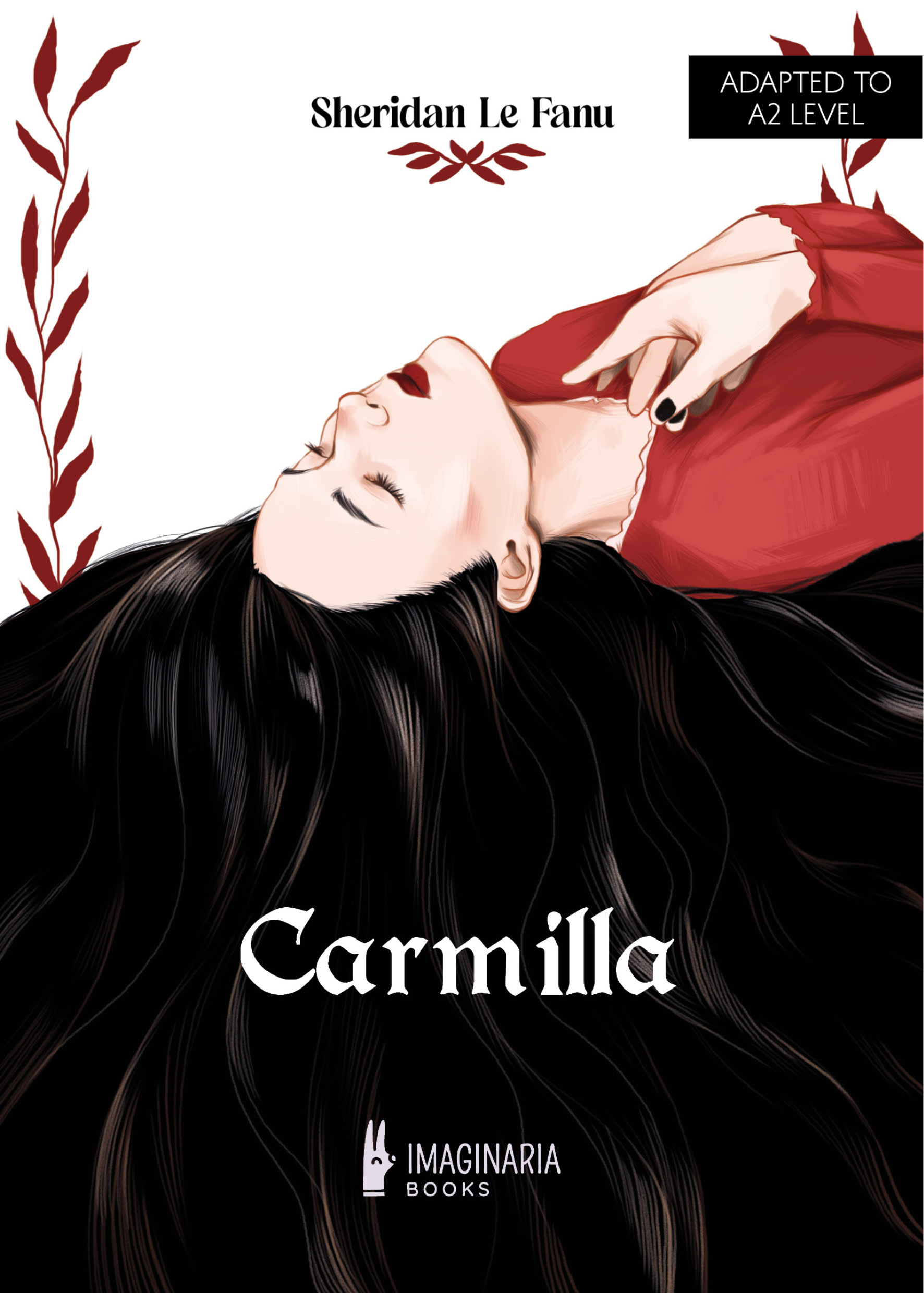
Laura se siente sola en su castillo, donde no vive ningún otro joven, por lo que se alegra mucho cuando conoce a Carmilla, una chica hermosa y encantadora que va a quedarse con ella durante algunas semanas. Pero pronto su felicidad se mezcla con la preocupación por tres razones: Carmilla dice y hace cosas extrañas, las jóvenes del pueblo están muriendo y la propia Laura comienza a enfermar poco a poco. Entonces empieza a preguntarse: ¿podría haber una conexión entre las tres cosas?
Carmilla (A2 level)
- Nivel A2 (MCER)
- Glosario monolingüe
- Texto íntegro en el idioma
14,00 €
✓ Envío gratuito en España (Península y Baleares)·✓ Pago seguro
Especificaciones
| ISBN | 9791387722227 |
|---|---|
| Colección | |
| Encuadernación | Rústica sin solapas |
| Dimensiones | 140 x 200 mm |
| Peso | 160 g |
| Extensión | 118 páginas |
| Idioma | Inglés |
| Formato | Papel |
| Ebook | Disponible en las principales plataformas digitales |
- Mejorar la comprensión lectora en inglés a través de una historia gótica, intrigante y accesible.
- Ampliar el vocabulario con palabras y expresiones de uso cotidiano en contexto.
- Reforzar estructuras gramaticales básicas, como el pasado simple, los adjetivos y los conectores.
- Fomentar el gusto por la lectura en otro idioma con un clásico adaptado.
- Ganar confianza al leer en inglés gracias a una narración sencilla y llena de suspense.
- Acercar la literatura gótica en lengua inglesa a lectores de todas las edades.
- Favorecer la lectura guiada o compartida, en clase o en casa.
1. Lonely: unhappy because you are not with other people.
2. A tomb: structure or place, often underground, where a dead person is buried.
3. A servant: a person who works in another person’s house, doing jobs such as cooking and cleaning, especially in the past.
4. A governess: a woman who lives with a rich family and teaches and looks after their children at home, especially in the past.
5. A ghost: the spirit of a dead person, which stays in the living world after death.
6. To touch: to put your hand or another part of your body lightly over something or someone.
7. A needle: a thin piece of metal, used in sewing, that is pointed at one end and has a hole at the other end.
8. To pierce: to go into or through something, making a hole in it.
9. The chest: the upper front part of the body of humans and some animals, between the stomach and the neck.
10. To scream: to shout or make a loud noise, usually because of strong emotions such as fear, excitement or anger.
11. A nightmare: a scary or sad dream.
12. Silly: not intelligent or not serious.
13. Although: but.
14. A niece: a daughter of your brother or sister, or a daughter of your husband’s or wife’s brother or sister.
15. A carriage: a vehicle used in the past, with four wheels and usually pulled by horses.
16. A voice: the sounds each person make when they speak or sing.
17. The death: the end of life.
18. A whisper: to speak very quietly so only the person close to you can hear you.
19. Ugly: unpleasant to look at, not attractive.
20. Weak: not physically strong.
21. The charm: a quality that makes you like or feel attracted to someone or something; you can be charmed by someone and someone can be very charming.
22. To/a sigh: to let out air through your nose slowly and noisily, expressing tiredness, sadness, pleasure, etc.
23. The truth: the quality of being true.
24. A lock: a mechanism that keeps a door closed and which can be only opened with a key.
25. A portrait: a painting, photograph, drawing, etc. of a person.
26. A priest: a person who has been taught and authorized by the Church to perform religious rites.
27. A masquerade: a party or dance in which people wear masks, a covering for all or part of the face.
28. An axe: a tool used for cutting wood.
29. The revenge: to hurt someone who has hurt you or another person.
30. A sword: an object used for fighting, especially in the past, with a long, metal blade.